


You can reduce irrigation with soil hydrogel when the treated root zone stays moist longer between waterings. The gain shows up as a longer irrigation interval, not as a fixed saving. Soil texture, rooting depth, water quality and weather decide how far that interval can stretch. This guide shows where intervals are most likely to lengthen, how to place the hydrogel, and how to adjust the schedule safely.
Soil hydrogel helps reduce irrigation frequency by adding a water reserve inside the root zone. After each irrigation, the granules absorb part of the water that would otherwise drain past the roots. As the soil dries, roots draw on that reserve. The root zone therefore takes longer to fall to the point where the crop needs water again.
That point is your refill trigger. The irrigation interval is the time the soil takes to dry from its wet state after irrigation down to that trigger. Hydrogel can lengthen this time, but it cannot stop the crop from using water. Hot, windy days still empty the reserve faster.
Fewer irrigations do not automatically mean less water. If each event becomes larger, total use may stay the same. Record the number of irrigations and the volume applied as two separate figures. For the wider picture of water management, read about agricultural hydrogel and irrigation.
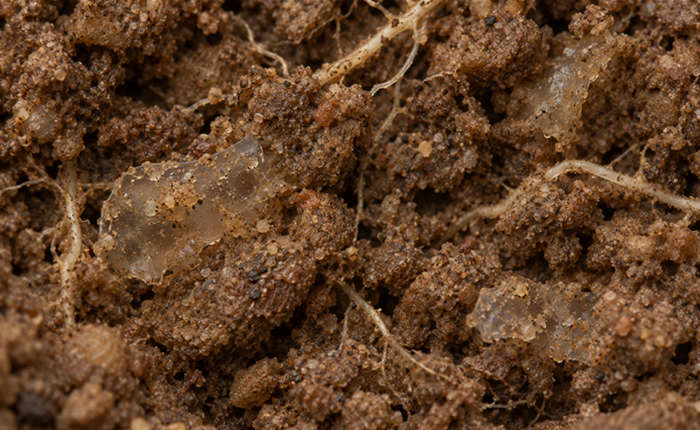
Soil hydrogel lengthens the irrigation interval most where water drains quickly, and roots work in a limited volume of soil.
Sandy and loamy sand soils are the clearest cases, because water moves through them quickly. Fields under drip irrigation also fit well, since the wetted zone is small and easy to treat. Establishment is another strong window. Seedlings, transplants, and young trees have shallow roots, so a steadier moisture supply between waterings matters more. Our guide to transplant survival covers that stage in more detail.
Salty or hard irrigation water reduces how much water the granules absorb. Shallow roots and a small wetted zone cap the reserve the crop can reach. A heat wave can shorten an interval that worked in mild weather. In slowly draining soil, irrigating less often may improve aeration, but that change is not evidence of a hydrogel effect. Correct drainage and uneven distribution before you credit any amendment.
Applying hydrogel for fewer irrigations means placing it where irrigation water and active roots meet. Under drip, put the granules in the wetted strip along the row, at root depth. Under sprinklers or pivots, work them into the topsoil across the planting zone. For transplants and trees, mix them into the backfill around the root ball.
A common mistake is leaving granules on the surface. Surface granules dry in the sun and are unlikely to reach the roots or affect the schedule. Apply hydrogel at planting or sowing, when the root zone is easy to reach. Follow the rate on the product label.
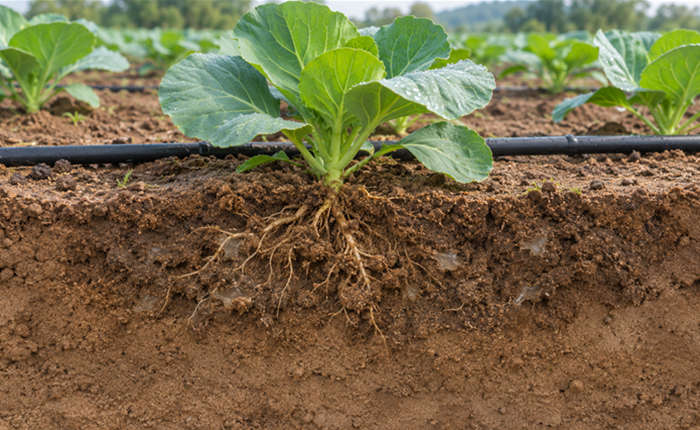
Adjusting irrigation after applying soil hydrogel starts with measurements, not with a skipped watering on the calendar. If you simply skip a scheduled irrigation, you are testing how the crop responds to stress, not whether the hydrogel has extended the interval.
Choose a soil moisture reading at root depth that tells you the crop needs water. Base it on local crop guidance and your soil's water-holding capacity. Use the same trigger for treated and untreated areas.
Keep an untreated strip on similar ground, with the same crop stage and irrigation. Irrigate each area when it reaches the trigger, rather than on fixed days. For example, consider vegetables grown under drip irrigation on a sandy loam. The untreated strip reaches the trigger on the old schedule. If readings in the treated strip stay above it longer, the next irrigation there can wait until it does. Repeat this through different weather before changing the whole field.
Go back to the previous interval if moisture nears the trigger early, wetting becomes uneven, or plants show lasting stress. Pushing the gap just to log fewer irrigations puts the crop at risk. Check readings at more than one depth and position. One sensor can sit in a wet pocket while other roots dry out.
A soil hydrogel irrigation plan depends on crop and growth stage, soil texture, root depth, water quality, and irrigation method. Each one shifts the advice. Coarse soils and drip systems offer the strongest chance of a longer interval. Salty water calls for a grade tested in similar water. Deep-rooted, mature crops rely less on the treated layer.
Our technical team at SOCO® can suggest sensor positions, a refill trigger, and a trial layout for your fields. Test reports are available for many SOCO® grades, and we can arrange testing in your irrigation water on request. See our field crops applications, then share your crop, soil, water, and irrigation details through our contact us page.
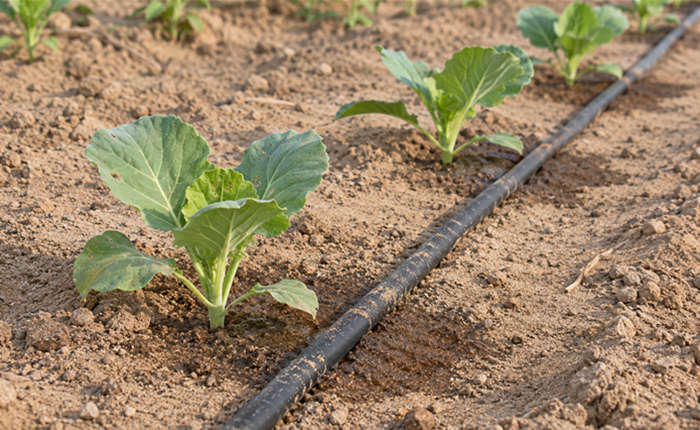
Soil hydrogel can reduce irrigation frequency where water drains fast, and roots work in a limited zone. Sandy soils, drip rows, and new plantings are the clearest cases. Place it where water and roots meet, set a refill trigger, and extend the interval only as moisture readings allow. Keep counting both events and volume. See how we approach water use efficiency on farms, or contact us to plan a trial with our team.
There is no fixed number of extra days for soil hydrogel. Start from your current interval and irrigate when the treated area reaches the refill trigger. The gap you measure over several weeks of normal weather is your answer.
Not necessarily. Larger individual irrigations can cancel out the drop in events. Track applied volume as well as the number of irrigations.
No. By the time plants wilt, the crop is already stressed. Use soil moisture at root depth as the main trigger, and treat plant appearance as a backup check.
Place sensors in both the treated and untreated areas, at a shallow depth and within the main root zone. Add more positions where soil or wetting varies across the field.
Crop water demand rises sharply in hot weather, even with soil hydrogel in place. Go back to a shorter interval and irrigate by the trigger. Move back to the longer interval when readings show the soil again stays above the trigger.
Yes. Establishment is often when the effect of soil hydrogel is easiest to see. Young roots explore little soil, so a reserve in the planting zone keeps moisture steadier between irrigations. Place the hydrogel close to the roots at planting.
611-40, BLOCK A, BUILDING 11, QINGDAO SOFTWARE PARK, 288 NINGXIA ROAD, SHINAN DISTRICT, QINGDAO, SHANDONG



